Chart Pack: 2026-05-22
Big Picture Thinking, One Chart At A Time
Financial Markets
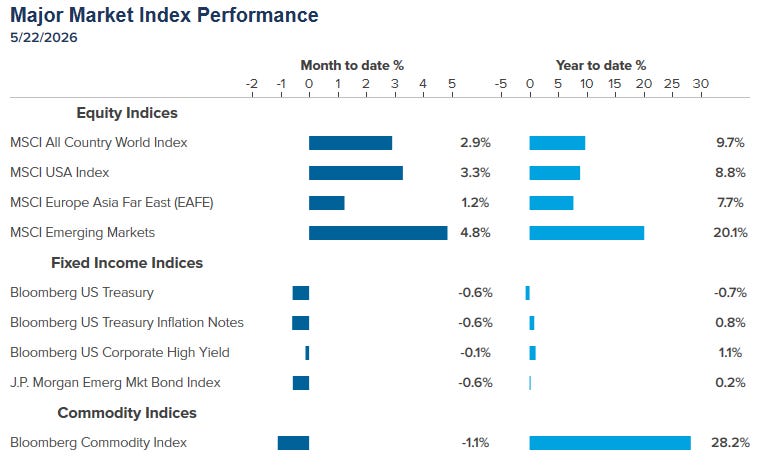
This Week in Macro
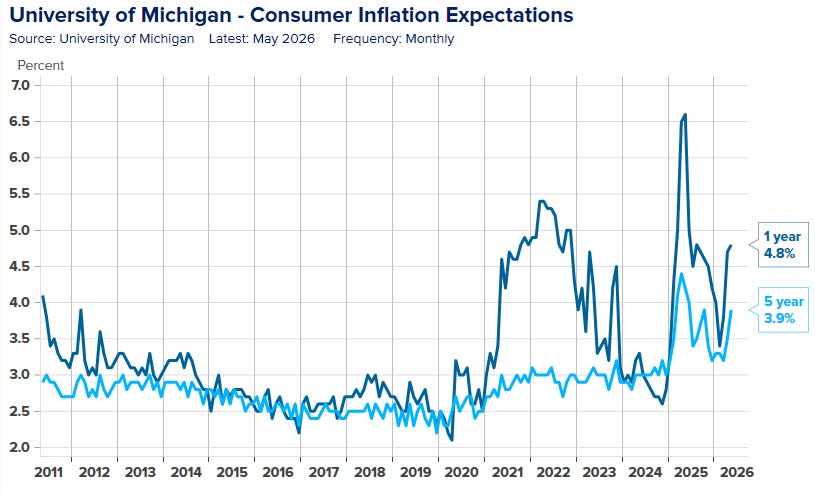
Consumer Inflation Expectations Stabilizing
The Data: One-year inflation expectations are currently at 4.8%, while five-year expectations are at 3.9%.
Why It Matters: Stable inflation expectations can influence consumer spending and investment decisions, impacting overall economic growth.
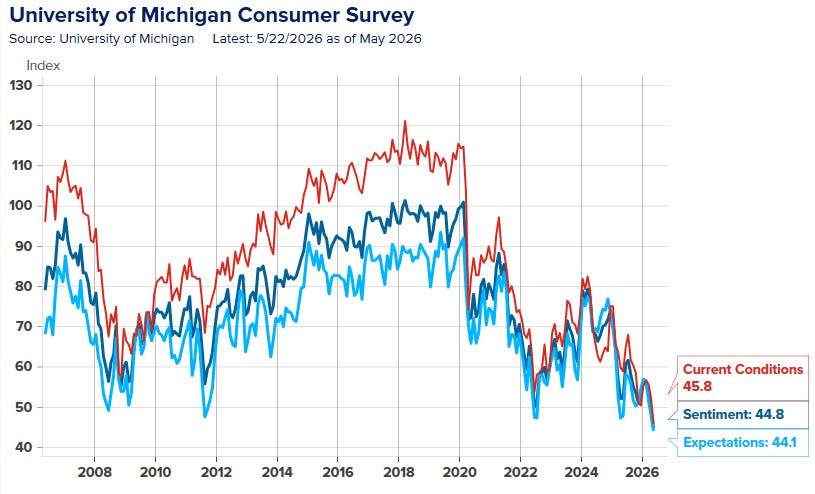
Consumer Sentiment Declines Sharply
The Data: The University of Michigan Consumer Survey shows a significant drop in consumer sentiment and current conditions, with both metrics nearing historical lows.
Why It Matters: This decline indicates weakened consumer confidence, which can lead to reduced spending and slower economic growth.
Other Economics
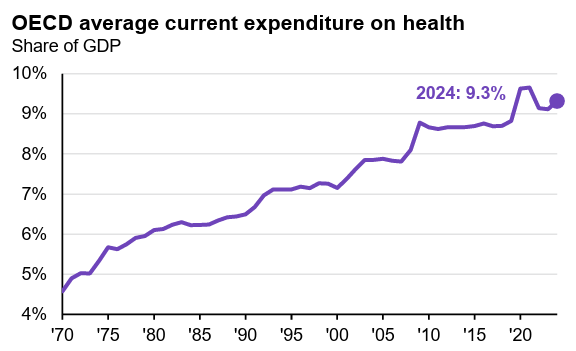
Rising Health Expenditure in OECD Countries
The Data: OECD average current expenditure on health is projected to reach 9.3% of GDP in 2024.
Why It Matters: Increased health spending reflects growing demand for healthcare services, impacting budget allocations and resource management across economies.
Rising Debt for Essentials
The Data: Americans largely use debt for necessities.
Why It Matters: This trend indicates increasing financial strain on households, potentially impacting consumer spending and economic stability.

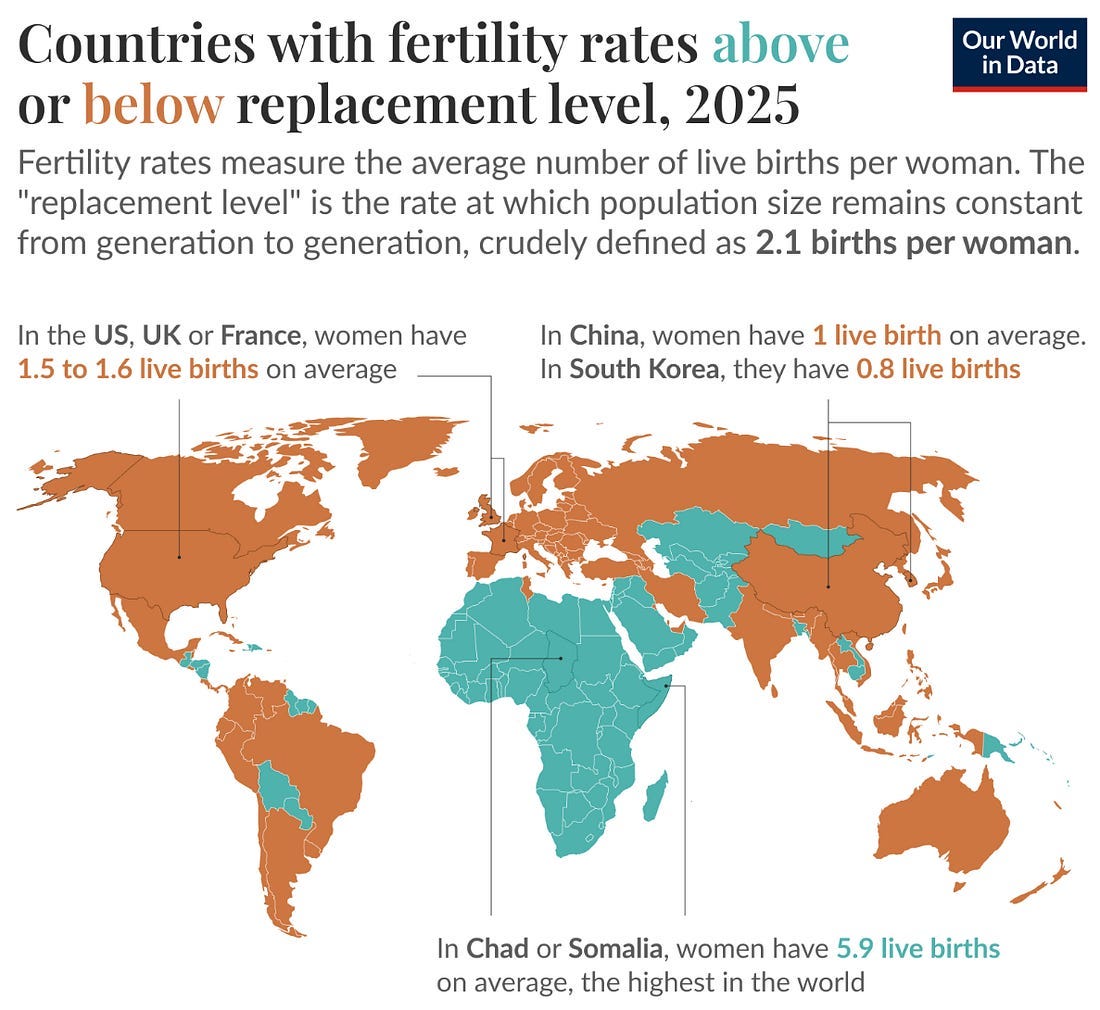
Global Fertility Rates Diverge
The Data: The fertility rate has fallen below the replacement level of 2.1 births per woman in almost every country in North America, South America, Europe, Southern and Eastern Asia.
Stock Markets
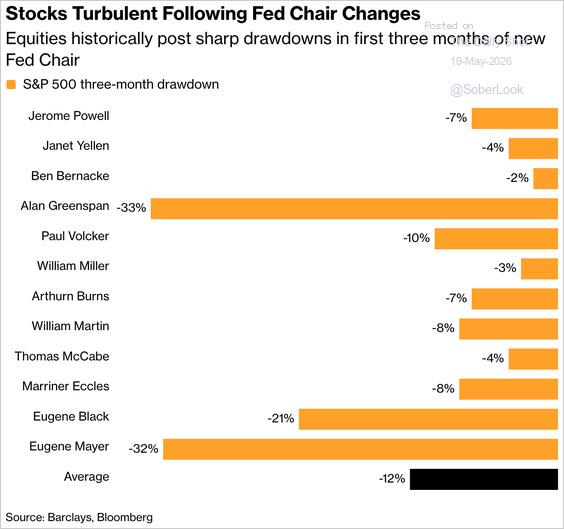
Significant Drawdowns After Fed Chair Changes
The Data: The average S&P 500 drawdown in the first three months following a new Fed Chair is 12%, with notable declines from Alan Greenspan at 33% and Eugene Mayer at 32%.
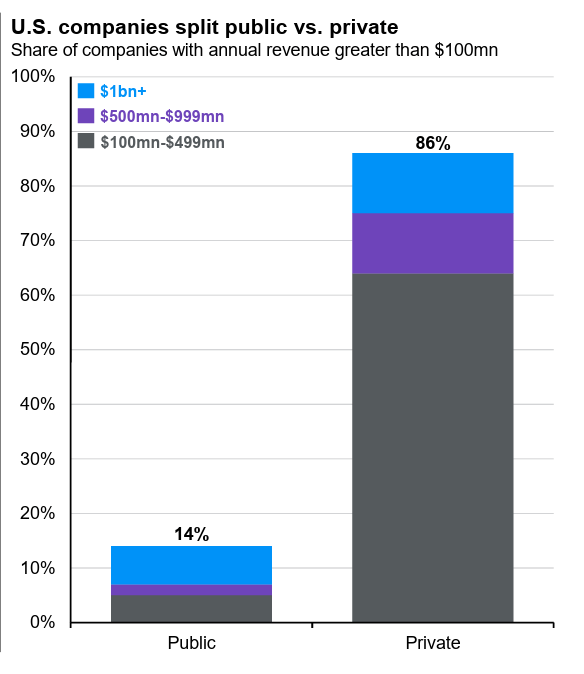
Dominance of Private Companies
The Data: 86% of U.S. companies with annual revenue greater than $100 million are private.
Why It Matters: This concentration of private ownership limits public-market investment opportunities and may influence capital allocation strategies.
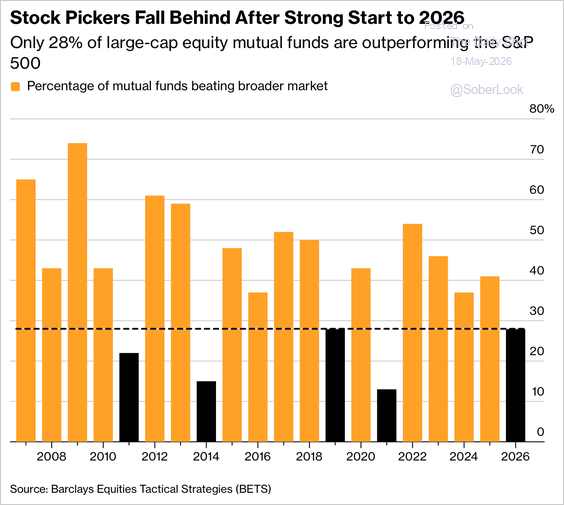
Decline in Active Fund Performance
The Data: Only 28% of large-cap equity mutual funds are currently outperforming the S&P 500.
Why It Matters: This trend indicates a growing challenge for active managers to justify fees, potentially shifting investor preference towards passive strategies.
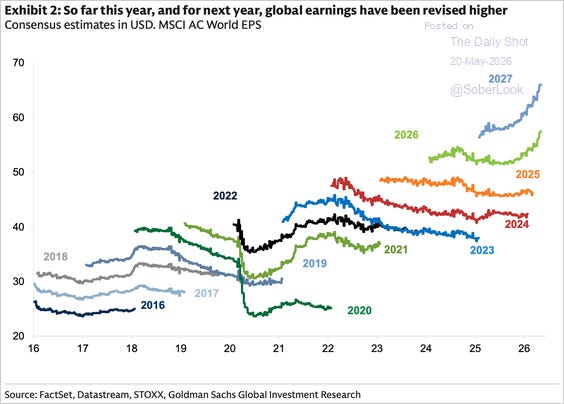
Global Earnings Estimates on the Rise
The Data: Consensus estimates for global earnings have been revised upward for 2026 and 2027, reflecting a positive trend in projected earnings per share.
Why It Matters: This upward revision signals stronger expectations for corporate profitability, which may influence investment strategies and market valuations.
Interest Rates
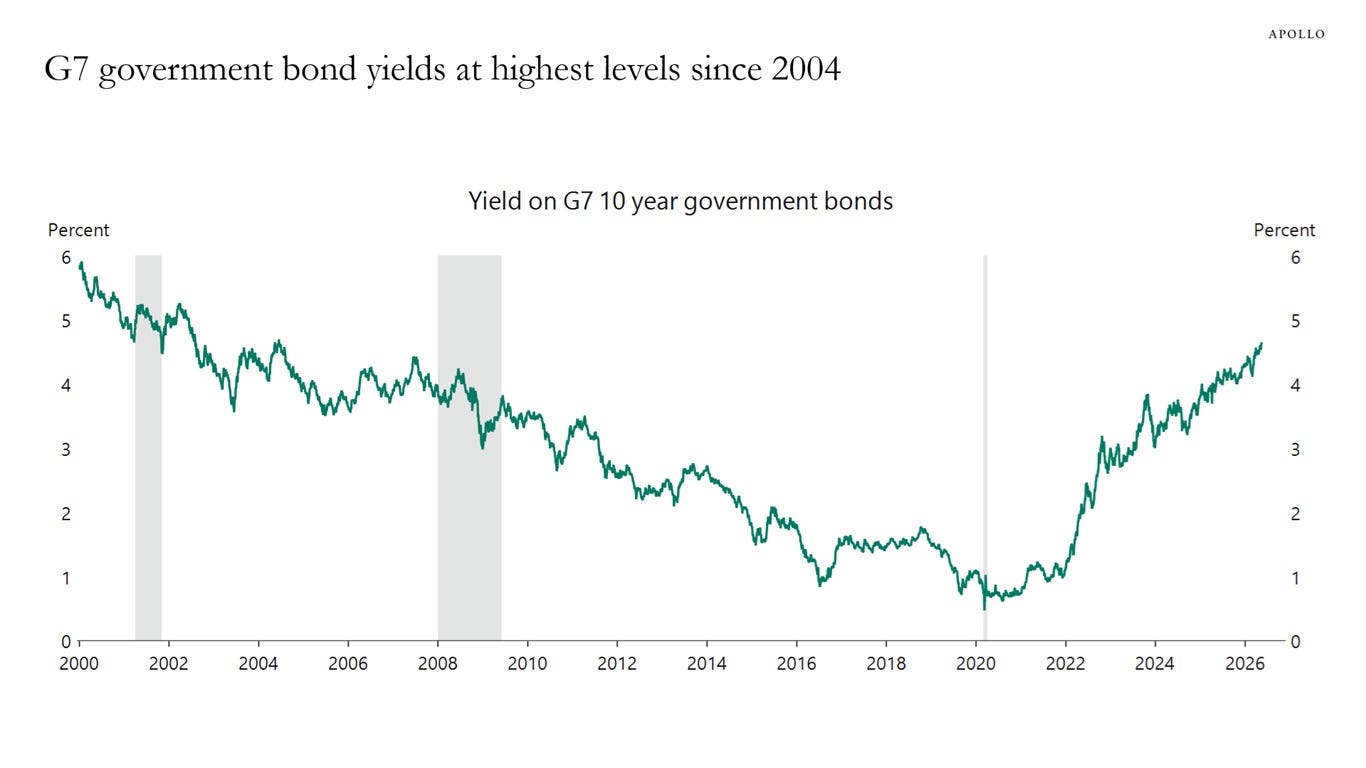
G7 Bond Yields Reach 2004 Levels
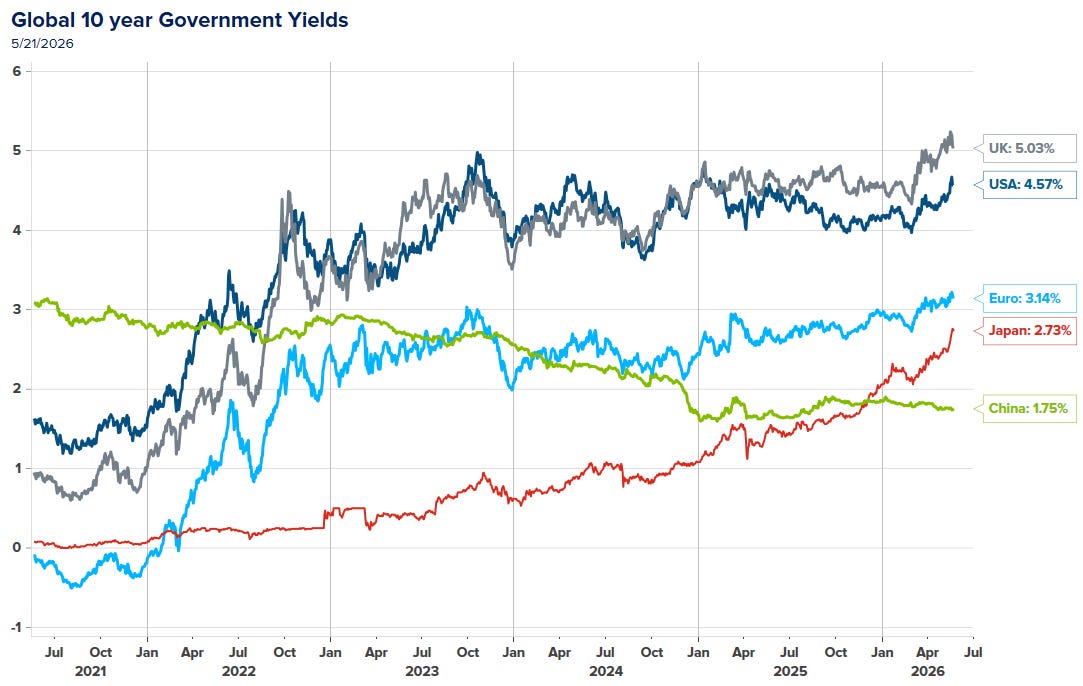
The Data: G7 government bond yields have risen to their highest levels since 2004, approaching an average of 5%.
Why: renewed inflation pressure from high energy prices, persistently large government deficits requiring increased bond issuance, the end of central bank quantitative easing, investors demanding yield premiums due to deglobalization, and increased political fragmentation.
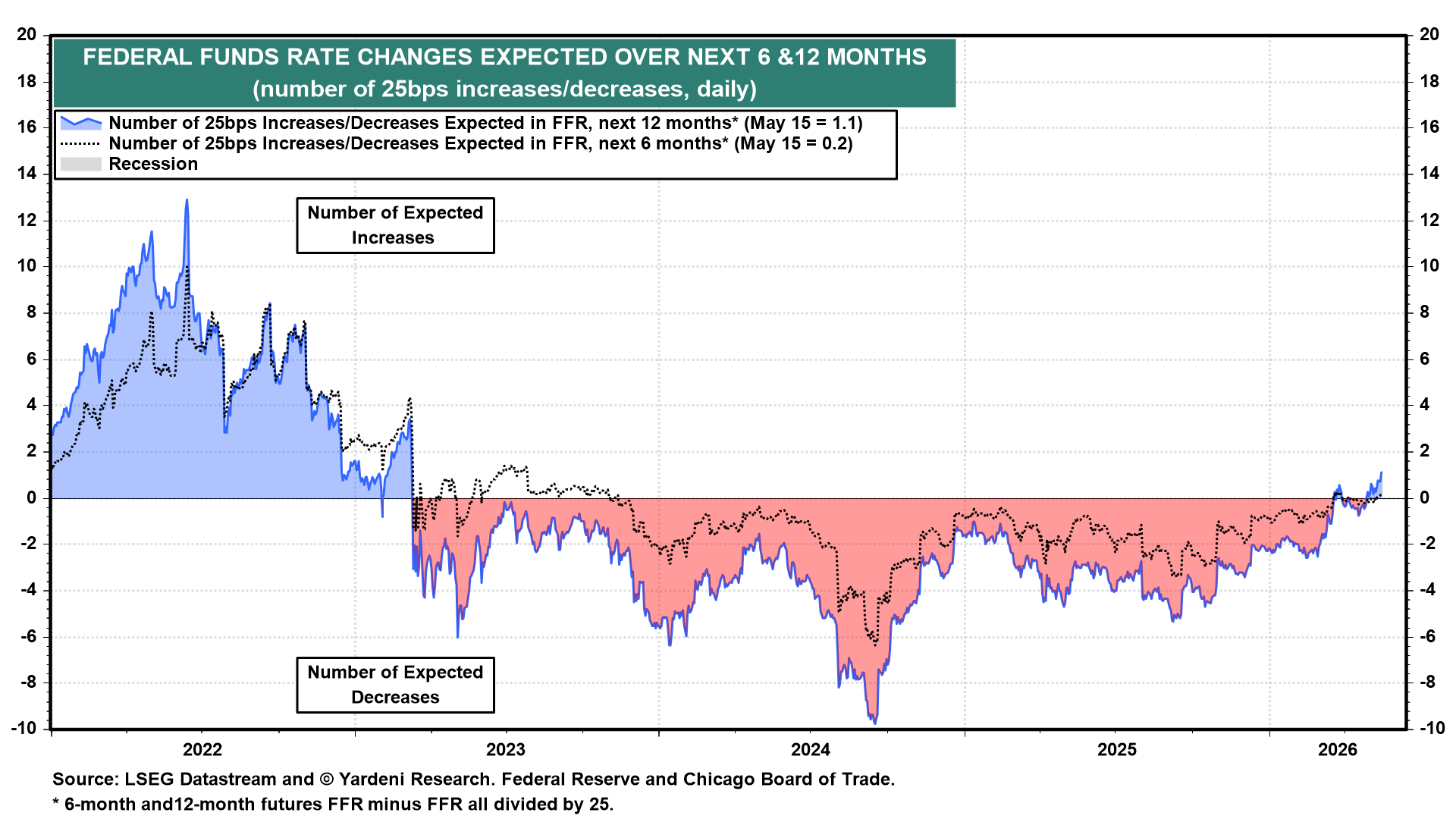
Federal Funds Rate Expectations Shift
The Data: Market expectations for Federal Funds rate changes have shifted from substantial rate cuts to modest rate increases, as inflation rises.
Credit Markets
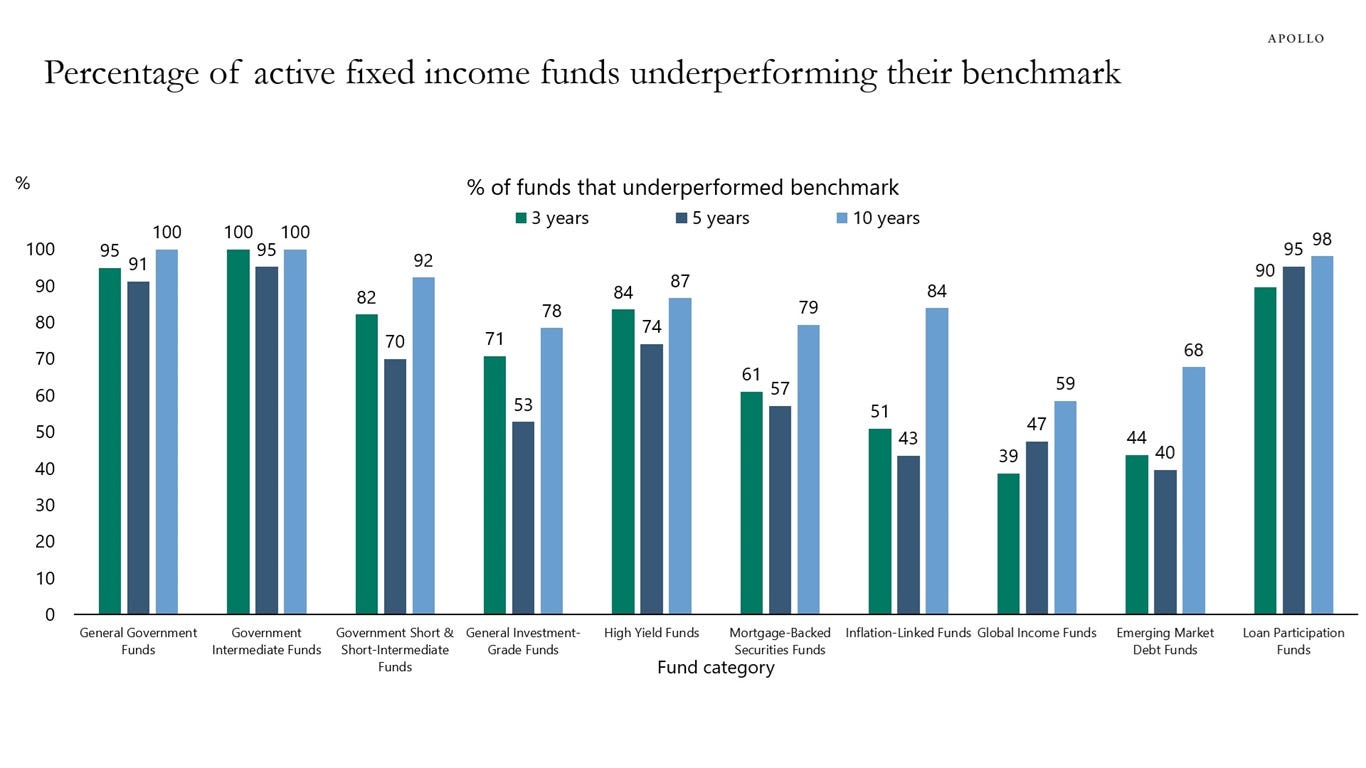
High Percentage of Fixed Income Funds Underperforming
The Data: A significant majority of active fixed income funds are underperforming their benchmarks, with up to 98% in certain categories over 10 years.
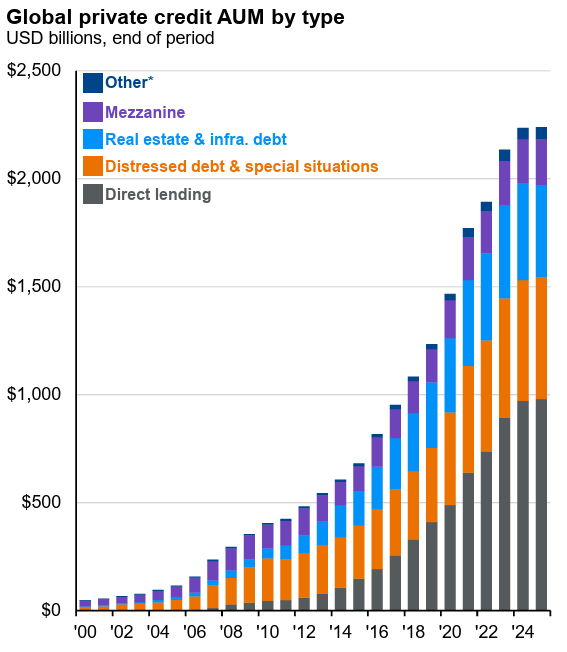
Growth in Global Private Credit AUM
The Data: Global private credit assets under management have steadily increased, surpassing $2 trillion by 2024.
Why It Matters: This growth indicates a shift in capital allocation towards private credit, reflecting changing investor preferences and potential liquidity constraints in traditional markets.
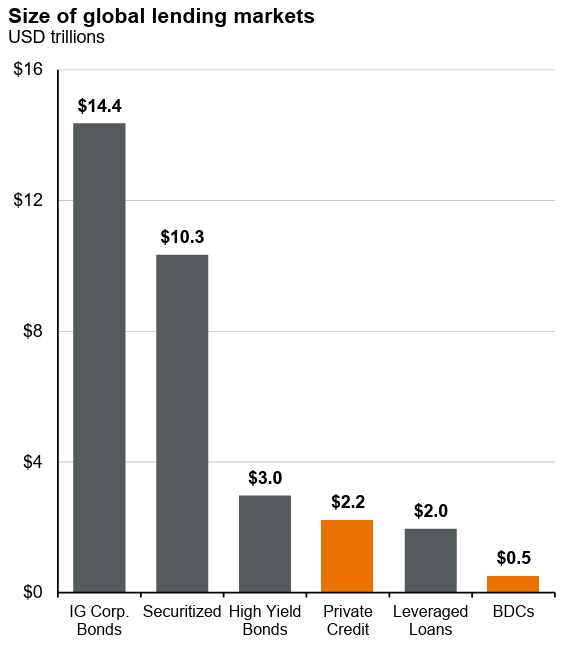
Global Lending Market Size Disparities
The Data: The global lending market is dominated by IG Corporate Bonds at $14.4 trillion, significantly outpacing other segments.
Why It Matters: This concentration indicates a reliance on traditional debt instruments, which may limit diversification and increase vulnerability to market shifts.
Climate
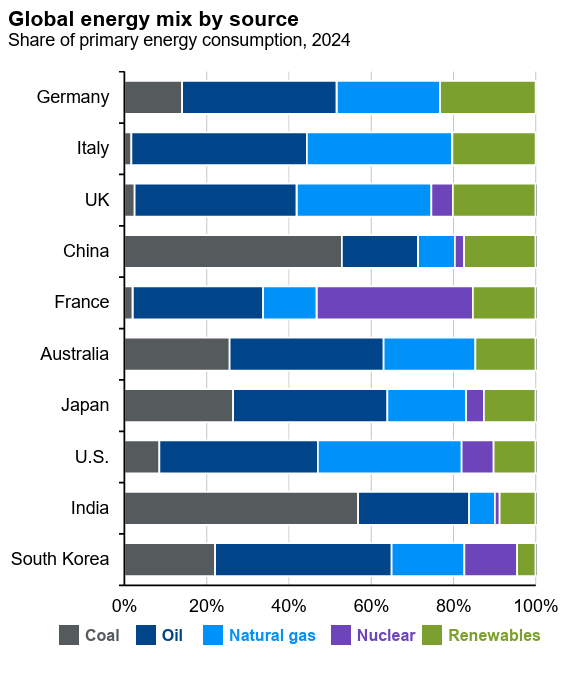
Diverse Energy Mix Across Major Economies
The Data: In 2024, countries such as Germany and the UK are significantly increasing their share of renewable energy, while nations such as China and India continue to rely heavily on coal and natural gas.
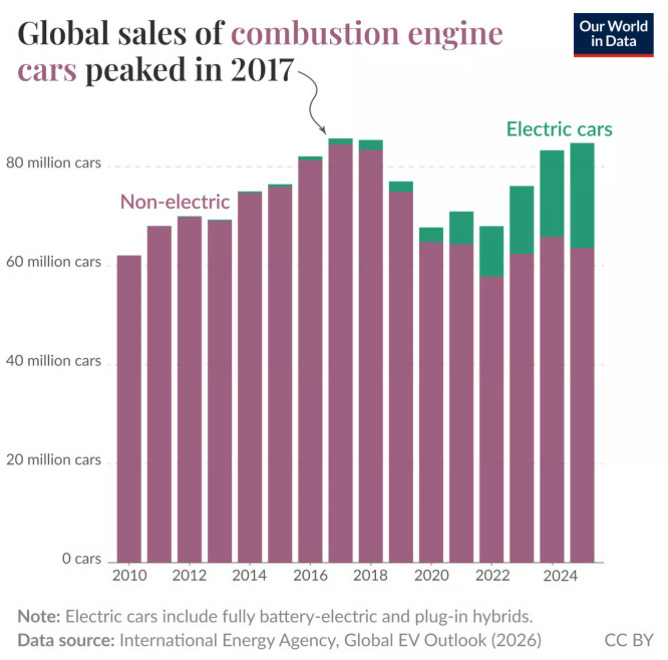
Shift in Global Car Sales Dynamics
The Data: Global sales of combustion-engine cars peaked in 2017, followed by a decline as electric car sales rose.
Why It Matters: This trend indicates a significant shift in consumer preferences and regulatory pressures, impacting automotive industry strategies and investments.
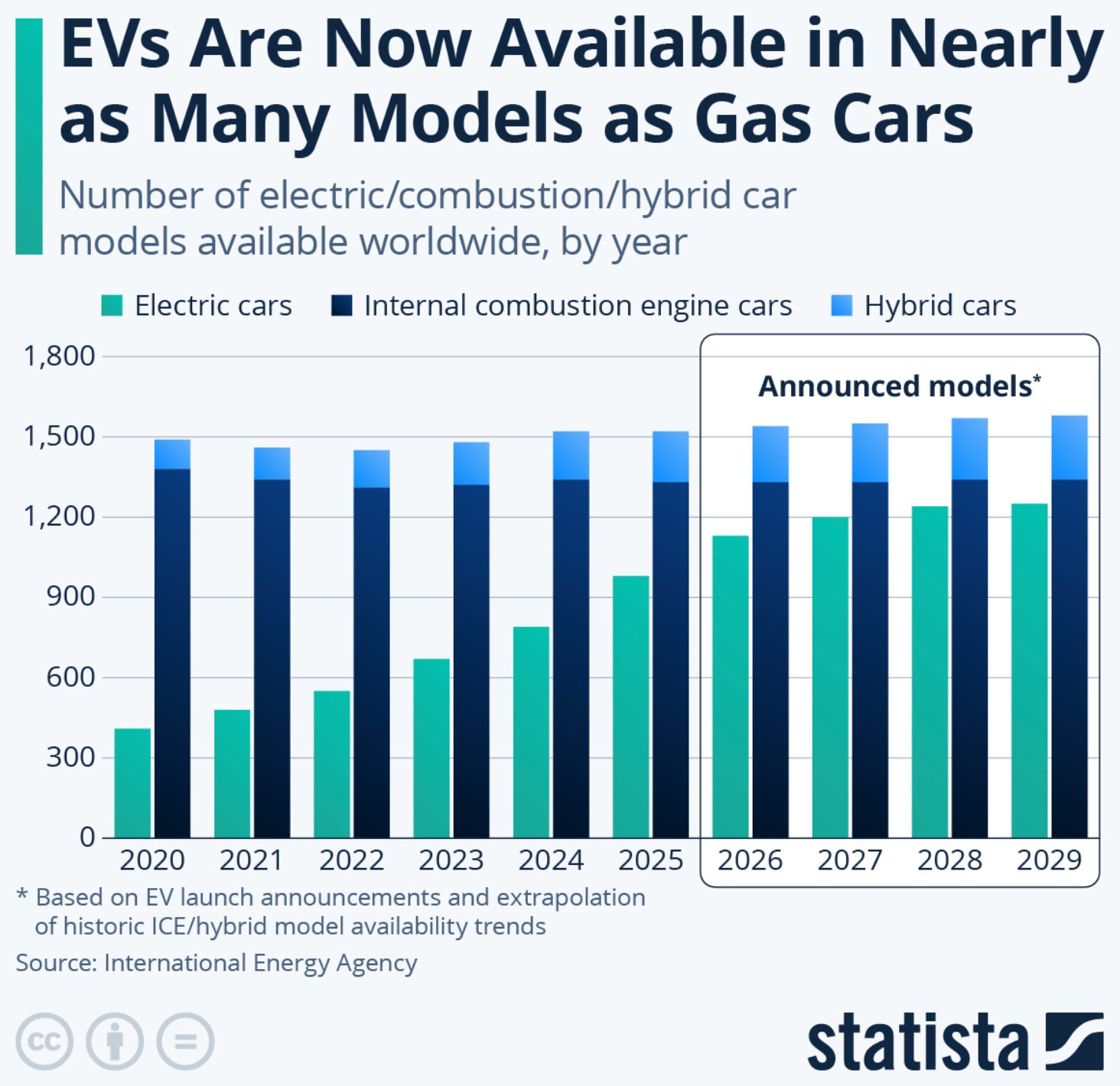
EV Model Availability Approaches Parity with Gas Cars
The Data: The number of electric vehicle models available globally is nearing the total for internal combustion engine models, with projections indicating a significant increase through 2029.
Why It Matters: This shift indicates a potential turning point in consumer choice and market dynamics, influencing manufacturers’ strategies and investment in electric mobility.
Other Interesting Charts
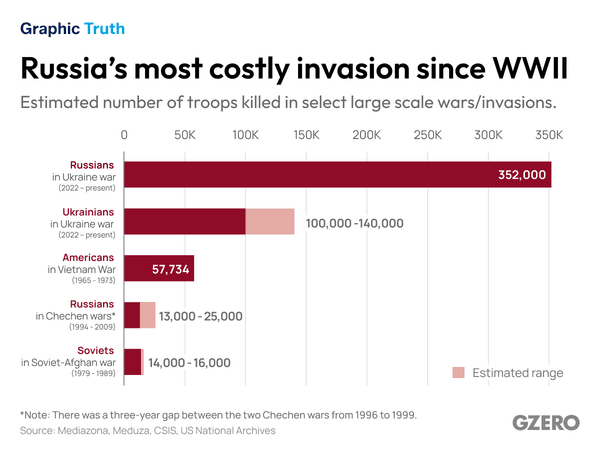
High Casualties in the Ukraine Conflict
The Data: The estimated number of Russian troops killed in the Ukraine war has reached 352,000, making it the most costly invasion for Russia since World War II.
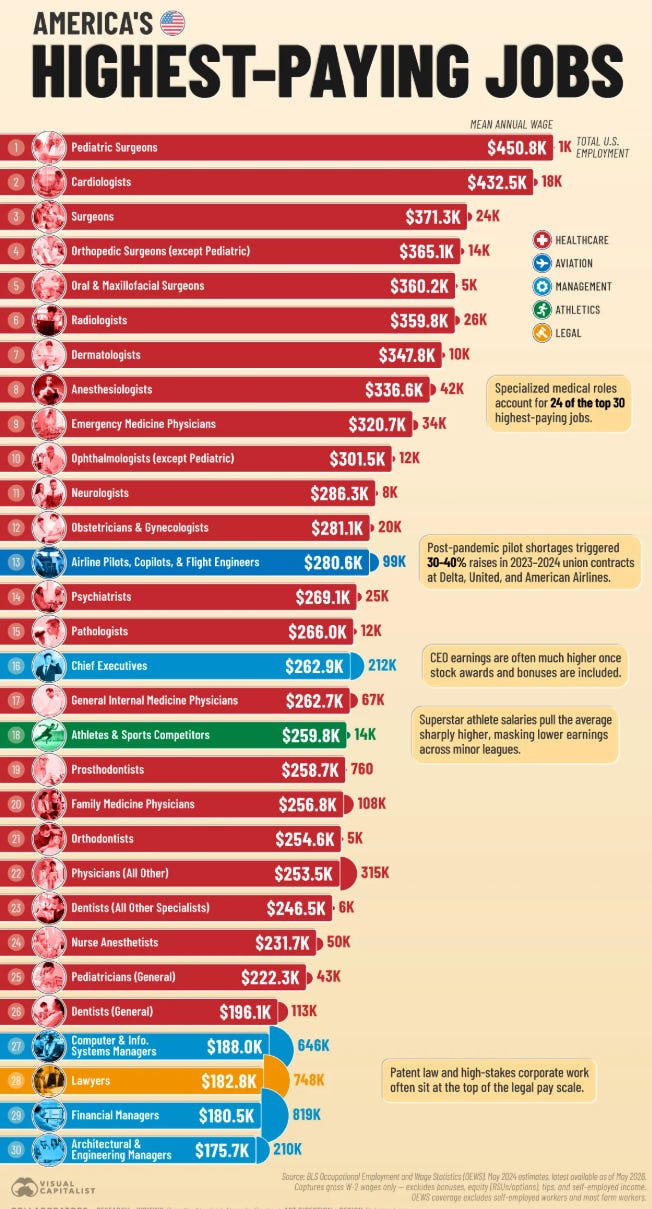
Top Earning Professions in the U.S.
The Data: The dominance of specialized medical roles highlights the ongoing demand for healthcare professionals, influencing workforce training and resource allocation in the sector.
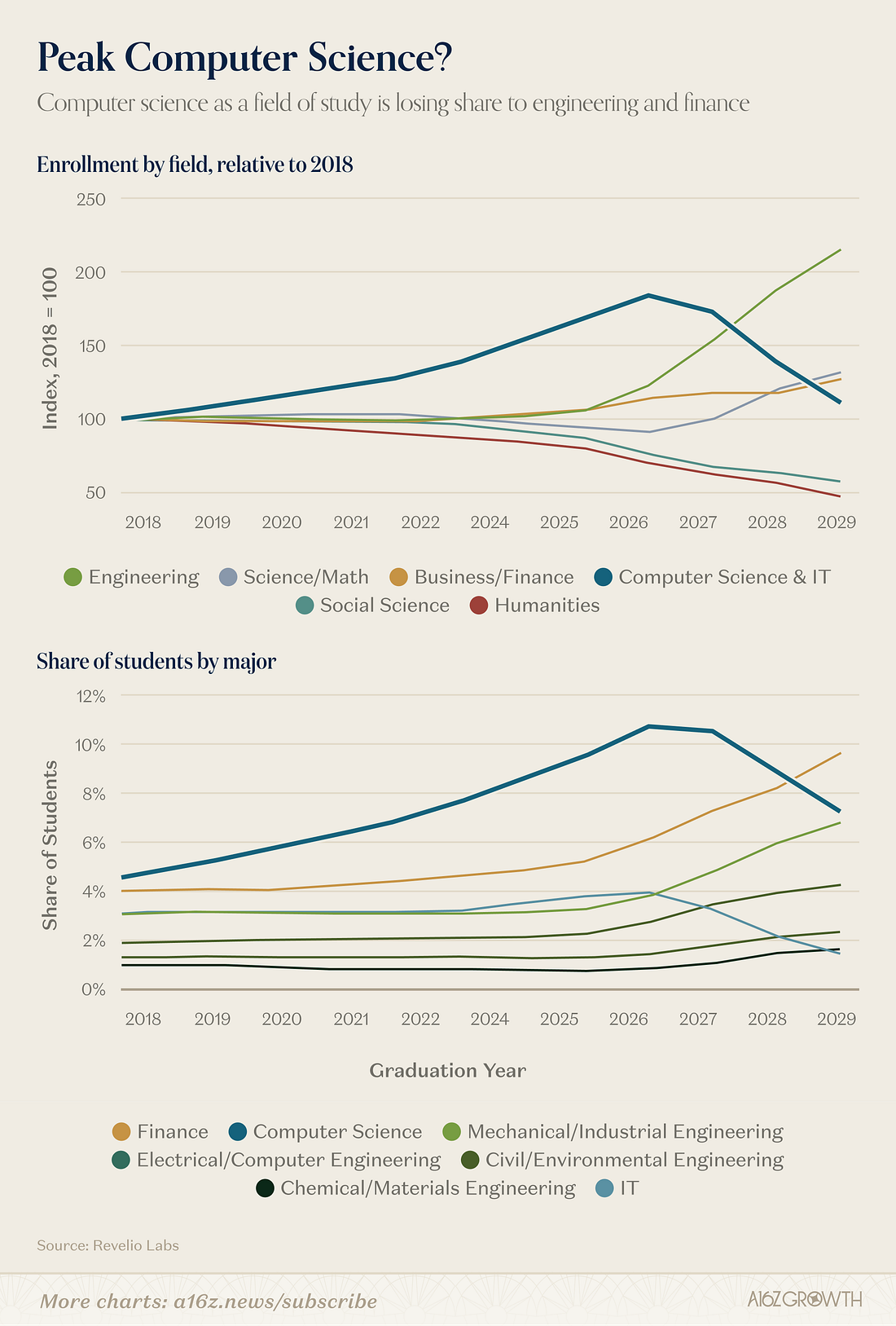
Decline of Computer Science Enrollment
The Data: Computer science enrollment is decreasing relative to the engineering and finance fields from 2018 to 2029.